Residential Proxies Benefits Uses and How They Work
Key takeaways
- Residential proxies route traffic through real home ISP connections.
- They help access geo-targeted content and reveal localized pricing.
- Rotating residential proxies provide fresh IPs for each request.
- They avoid detection better than data center VPNs for web scraping.
- Used by AI agents to gather pricing from multiple countries accurately.
Residential proxies are specialized proxy servers that route your internet requests through real home internet connections, making your traffic appear as if it originates from genuine residential devices. This technology is essential for accessing geo-targeted content, avoiding detection during web scraping, and uncovering hidden or regional pricing differences on websites.
What Are Residential Proxies
Residential proxies use IP addresses assigned by Internet Service Providers (ISPs) to actual households. Unlike data center IPs used by VPNs, these IPs are recognized as legitimate residential users by websites, drastically reducing the chances of being blocked or flagged. This makes residential proxies ideal for tasks that require mimicking real user behavior across different regions.
How Residential Proxies Work
Each request sent through a residential proxy is routed via a real home ISP connection, which means websites see the connection as coming from a local user rather than a proxy or VPN server. Residential proxy providers often offer rotating proxies, changing the exit IP address with every new request to avoid detection and IP bans during intensive web scraping.
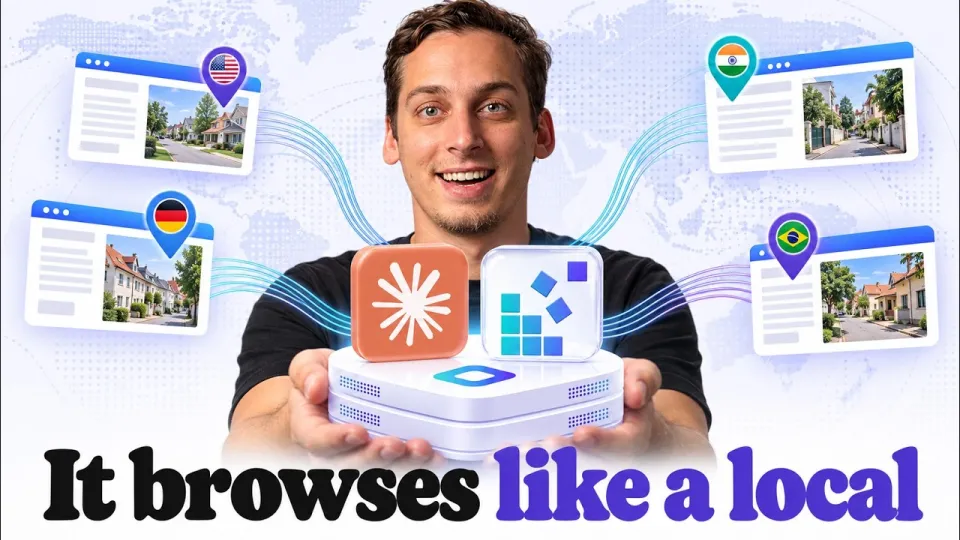
Video: This Claude Code Agent Uses Residential Proxies to Find Hidden Prices
Advantages Over VPNs and Data Center Proxies
VPNs typically route all traffic through a single data center IP, which is easy for websites to identify and block. Residential proxies, on the other hand, use a pool of real residential IPs distributed across countries, making detection much harder. This is especially important when scraping pricing pages or accessing region-specific services where websites apply geo-targeted pricing or content restrictions.
Use Case: Finding Hidden Prices with Claude Code Agent
An AI agent built with Claude Code and Playwright can utilize residential proxies from providers like DataImpulse residential proxies to open pricing pages from home internet connections in multiple countries such as the US, Germany, Brazil, and India. This approach allows collecting accurate localized pricing data for services like Spotify, Canva, ChatGPT, and Netflix without manual checks or VPNs.
By rotating residential IPs and targeting specific countries with username suffixes, the agent retrieves genuine price displays as they appear to local users. This method reveals substantial price differences—for example, Spotify Premium costs $12.99 a month in the US but only about $1.45 in India, and Canva Pro's annual price varies from $144 in one country to $42 in another.
Rotating Residential Proxies Explained
Rotating proxies assign a fresh residential IP address on each connection or request, preventing websites from detecting scraping patterns or blocking repeated requests from the same IP. For web scraping tasks that require hundreds or thousands of requests, rotating residential proxies are essential to maintain access and gather comprehensive data across regions.
Practical Tips for Using Residential Proxies
- Choose a reliable provider with a broad pool of residential IPs across target countries.
- Use rotating proxies to avoid IP bans and detection.
- Target specific geographic regions by selecting residential proxies from the desired country.
- Combine with tools like Claude Code and Playwright to automate data extraction and analysis.
- Regularly monitor proxy performance and IP reputation to ensure scraping efficiency.
Common Applications of Residential Proxies
- Web scraping for price comparison and market research
- Accessing geo-restricted content on streaming services
- Avoiding IP bans in automated testing and data collection
- Validating localized advertising and SEO performance
- Enhancing anonymity and security for online activities
Typical Questions About Residential Proxies
Many users wonder about the difference between VPNs and residential proxies, how proxies avoid detection, and the best providers to choose. It's also common to ask how residential proxies reveal pricing differences and whether rotating IPs are necessary.
Useful Links
- DataImpulse residential proxies with signup bonus
- Claude Code agent for AI-powered web scraping
- Playwright automation framework
- CreatorNTWRK Discord community
- Builderz Gym on Skool
Conclusion
Residential proxies offer a powerful way to access region-specific web content and reveal hidden pricing by routing requests through authentic home ISP connections. Unlike VPNs that use data center IPs prone to blocking, residential proxies provide higher reliability and stealth for web scraping and geo-targeted research. Tools like Claude Code combined with residential proxies from providers such as DataImpulse enable automated, accurate regional price comparisons for SaaS and streaming services. For anyone interested in competitive pricing analysis or bypassing geo-restrictions, residential proxies are an invaluable resource. Check out DataImpulse to get started with residential proxies and enhance your web scraping capabilities.
This analysis is based on the insights from the channel Lukas Margerie, who demonstrates these techniques in detail.
Questions & answers
What are residential proxies and how do they differ from VPNs?
Residential proxies use IP addresses from real home internet connections, making them appear as genuine users to websites. VPNs typically route traffic through data center IPs which are easier to detect and block. Residential proxies provide better anonymity and access to geo-targeted content.
Why are rotating residential proxies important for web scraping?
Rotating residential proxies assign a new IP address for each request, preventing websites from detecting repeated access from the same IP. This reduces the chance of IP bans and helps maintain uninterrupted scraping sessions.
How can residential proxies help find hidden prices?
Residential proxies allow accessing websites from different geographic locations by using local IPs. This reveals regional pricing differences and geo-targeted offers that are otherwise hidden when accessing from a single location.
Which residential proxy provider is recommended for automated pricing scraping?
DataImpulse is a recommended provider offering a large pool of residential IPs across multiple countries. It supports rotating proxies and integrates well with tools like Claude Code and Playwright for automated web scraping.
Source: This Claude Code Agent Uses Residential Proxies to Find Hidden Prices · Markdown version